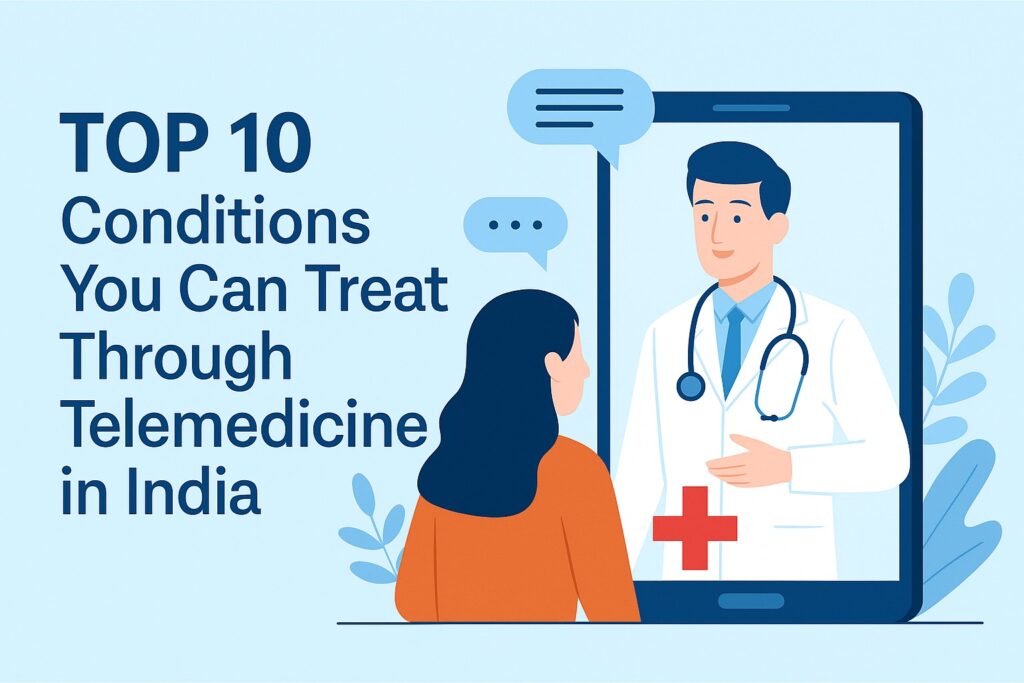
A few years ago, if someone said they had spoken to a doctor through a video call, most people reacted with raised eyebrows or a doubtful smile. But now? It’s as normal as ordering food online. Across India—cities, towns, even small villages people have slowly discovered that not every health problem requires a crowded waiting room or a long, tiring journey to the nearest clinic.
What started as a temporary shift during the pandemic has quietly grown into a permanent part of our healthcare culture. And honestly, it makes sense. Why get stuck in traffic or take half a day off for something as simple as a sore throat, when help is literally a fingertip away?
Let’s look at the top 10 health issues that can be safely and effectively treated online, without you needing to step outside your home.
1. Seasonal Fevers, Colds, Viral Infections
Almost all of us experience fever or a cold now and then. Most of these are mild and don’t require a physical check-up unless symptoms worsen. Telemedicine works beautifully here.
They ask a few simple questions about your history, suggest medicines, warn you about red flags, and may even recommend a test only if needed. And you’re done, no queues, no clinic germs, no traveling when you already feel weak.
If the fever becomes unusually high or breathing becomes difficult, a physical visit is necessary. But for everyday viral infections, online care is more than enough.
2. Skin Problems (Rashes, Acne, Allergies, Fungal Issues)
Skin issues don’t hide—they show up clearly on camera. That’s why dermatology is one of the most telemedicine-friendly fields.
Most skin issues don’t require touch-based testing. Good-quality photos or a video call is usually enough. On top of that, online dermatology removes the awkwardness some people feel when visiting a skin clinic.
3. Mental Health (Anxiety, Stress, Emotional Exhaustion, Insomnia)
One of the biggest silent revolutions of telemedicine has been mental health access. Earlier, a lot of people avoided therapy because they didn’t want to be seen walking into a counseling center or didn’t know how to start.
Online sessions changed everything. Now people talk openly—from their bedroom, from their balcony, even from their parked car.
The privacy, comfort, and ease of scheduling make online therapy feel safe and personal. Severe psychiatric cases still need in-person care, but for most emotional struggles, online support works extremely well.
4. Digestive Problems (Gas, Acidity, Constipation, IBS)
Digestive issues are incredibly common in India, often thanks to spicy food, irregular routines, and stress. Luckily, most of these conditions don’t need a physical examination.
They ask about food patterns, recommend medicines, suggest small lifestyle tweaks, and guide you on when to get tests. Only severe dehydration, intense pain, or blood in stool requires a hospital visit.
5. Women’s Health Concerns
For many women, visiting a gynecologist involves discomfort, long travel, or lack of privacy. Telemedicine has made these conversations easier, more personal, and far more accessible.
Doctors can evaluate symptoms, review past reports, and suggest next steps. If an in-person scan or pelvic exam is needed, they’ll inform you clearly.
6. Diabetes Management & Follow-ups
Diabetes doesn’t always need physical visits. What it needs is regular monitoring, consistent advice, and occasional adjustments in medication.
Since diabetes is a long-term condition, online check-ins help people stay consistent without putting life on pause.
7. Blood Pressure & Heart-Related Monitoring
Hypertension is common, especially among adults who have stressful jobs or sedentary routines. Managing it online is surprisingly easy.
Doctors help adjust medicines, analyze reports like ECGs or lipid profiles, and guide salt/diet control. If symptoms like chest pain or giddiness appear, you’ll be advised to seek urgent hospital care. But routine BP management works very smoothly online.
8. Sexual Health & Men’s Health Issues
This is where online consultations provide enormous relief. Many people hesitate to discuss sensitive issues face-to-face, so they delay treatment for months.
Online platforms give privacy and eliminate awkwardness, which means people finally get treatment instead of silently worrying.
9. Child Health (Non-emergency Pediatric Care)
If you’ve ever been around parents, you know one thing—they panic fast. Telemedicine gives them immediate guidance instead of rushing to the ER for mild issues.
If the child seems serious, doctors guide parents immediately to visit a hospital. For mild issues, online care is often enough and reassuring.
10. Joint Pain, Muscle Strain & Posture Problems
Modern lifestyles have introduced a new category of health complaints: posture-related pain. Online orthopedic care or physiotherapy works surprisingly well for these.
You receive exercises, posture correction tips, and medicine if needed. Only major swelling or suspected fractures require in-person care.
Choosing the Right Online Consultation Platform
Every platform looks similar until you notice the small details that matter. Choosing carefully ensures you get safe and reliable medical guidance.
What Actually Happens in an Online Consultation?
A lot of people imagine online consultations as “too simple,” but they’re surprisingly detailed. A typical session goes like this:
- The doctor asks about your symptoms in your own words
- They take your medical history
- You might upload photos or past reports
- They observe visible signs on video
- A diagnosis is discussed
- Medicines and home care tips are given
- A digital prescription is shared
- A follow-up plan is suggested
Most sessions run for 10–20 minutes and feel very much like a regular clinic visit—without all the waiting.
Conclusion
Telemedicine didn’t just make healthcare convenient; it made it human again. It removed unnecessary travel, reduced costs, brought specialists closer, gave privacy for sensitive topics, and made people feel more in control of their health.
Not everything can be treated online, and it shouldn’t be. But for nearly 60–70% of everyday health issues, telemedicine is safe, effective, affordable, and far simpler than the old system.
For many people in India, it’s not just a digital option, it’s a lifeline that brings medical help right to their doorstep.